
What Happens to Society When Independent Media Disappear?
The war has put Ukraine’s media under relentless pressure. Newsrooms are closing, journalists are reporting under shelling, and the information space is a constant target of Russian propaganda. The people who stay in the profession need more than encouragement; they need real opportunities and the tools to grow. That is exactly what Kyiv Media School offers – a project launched by ERSTE Foundation in partnership with the Media Development Foundation. Through its programs, journalists sharpen their reporting and interviewing skills, improve the way their newsrooms run, learn how to raise funding, and find ways to make their projects financially sustainable.
This June, Kyiv Media School launches Media Growth 3.0, a course built for media executives. Participants will rethink their business models, look for new revenue streams, and develop financial strategies resilient enough to hold up under uncertainty.
Together with ERSTE Foundation, Village looks at the challenges facing Ukraine’s media professionals – and at how they can build the skills to thrive in an increasingly unstable world.
Cover: photo by Khrystyna Ursuliak. Panel discussion within the “Investigative Journalism” course.
Journalism as a Safeguard of Democracy
By the count of the Institute of Mass Information, at least 329 media outlets in Ukraine have shut down since the start of the full-scale invasion, and only a handful have managed to start up again. Regional newsrooms, especially those near the front line, have been hit hardest.
The closure of a local outlet can look like just another statistic. In practice, it means there is no one left to put hard questions to local officials, and fewer journalists to explain what is really happening on the ground.
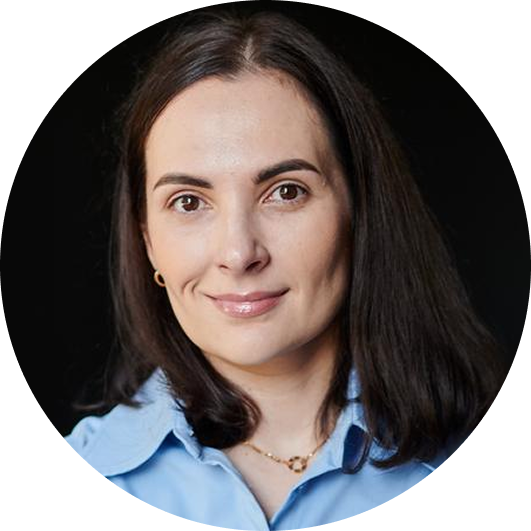
Yana Barinova
Director of the ERSTE Foundation «Ukraine» Program
When independent journalism weakens, society starts living by emotions, fears, and algorithms rather than facts. People lose their shared reality – and without one, mutual understanding, honest debate, and trust all become impossible. Journalism is often treated as nothing more than content. It is in fact a system of public navigation, especially in wartime. War is also a fight for the right to call things what they are.
When independent media grow scarce, propaganda, conspiracy theories, fatigue, and cynicism rush in to fill the vacuum. Society becomes far more vulnerable – politically, and psychologically too.
There is another point worth making. War creates a strong pull toward quick fixes and simple answers, and it is independent media that help a society stay grounded. They push people to ask hard questions, even of the side they support. They keep critical thinking alive and stop a society from running purely on reflex.
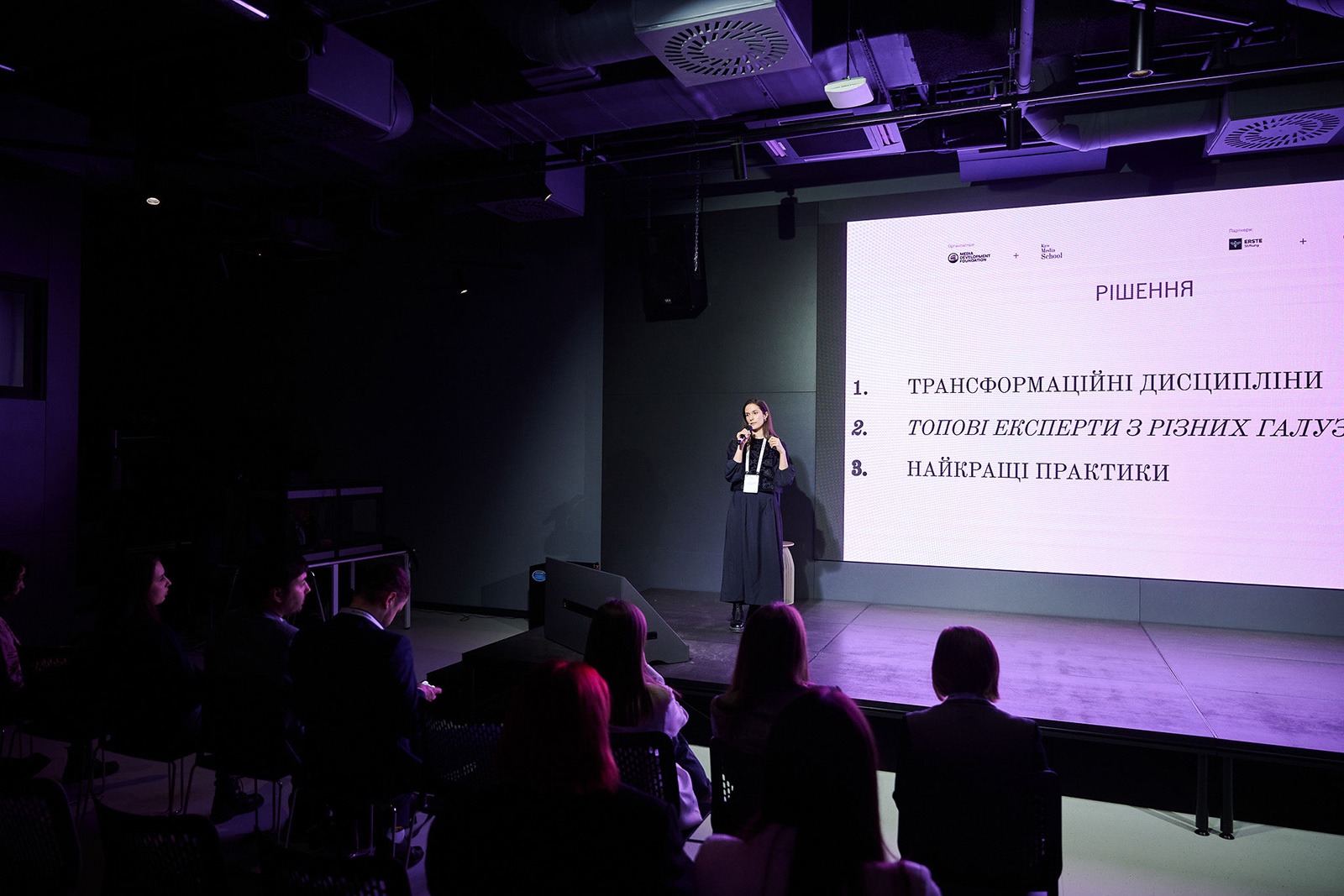
ERSTE Foundation’s Role in Ukraine
ERSTE Foundation works to strengthen democracy by supporting civil society across Europe, Ukraine included. Its focus is modern education: practical knowledge for the founders of social startups, media-literacy projects, charitable initiatives, and more.
After the full-scale invasion began, the foundation set up a dedicated Ukraine program and launched a series of initiatives, among them Next Visionaries and the Civil Society Leadership Programme for Ukraine. These are run with local and international partners, and new ones are added every year. Kyiv Media School is the foundation’s flagship project, offering a wide range of courses taught by leading practitioners.
How Kyiv Media School Was Created
The idea grew out of a simple observation: Ukrainian journalists work in extraordinarily difficult conditions, yet rarely get the chance for professional reflection, international exchange, or long-term planning. The founders wanted to build a space where media professionals could pick up new skills and also step back from the constant flood of information to think more deeply about democracy, ethics, European integration, technological change, and the responsibilities of journalism in a polarized world.
Yana Barinova
Director of the ERSTE Foundation «Ukraine» Program
Today a journalist has enormous influence over how society lives through crises, imagines the future, and understands its place in Europe and the world. We are interested in people who can navigate complexity rather than just produce headlines – people who can pair empathy with critical thinking and refuse to reduce reality to black and white.
Kyiv Media School is more than an educational project for media professionals. It was important to us that it not be merely a journalism school. We saw it as an environment where a new generation of media leaders could build deep professional expertise alongside a broader sense of where the country is heading. It is an investment in the people who will shape the quality of public dialogue in Ukraine over the next decade.
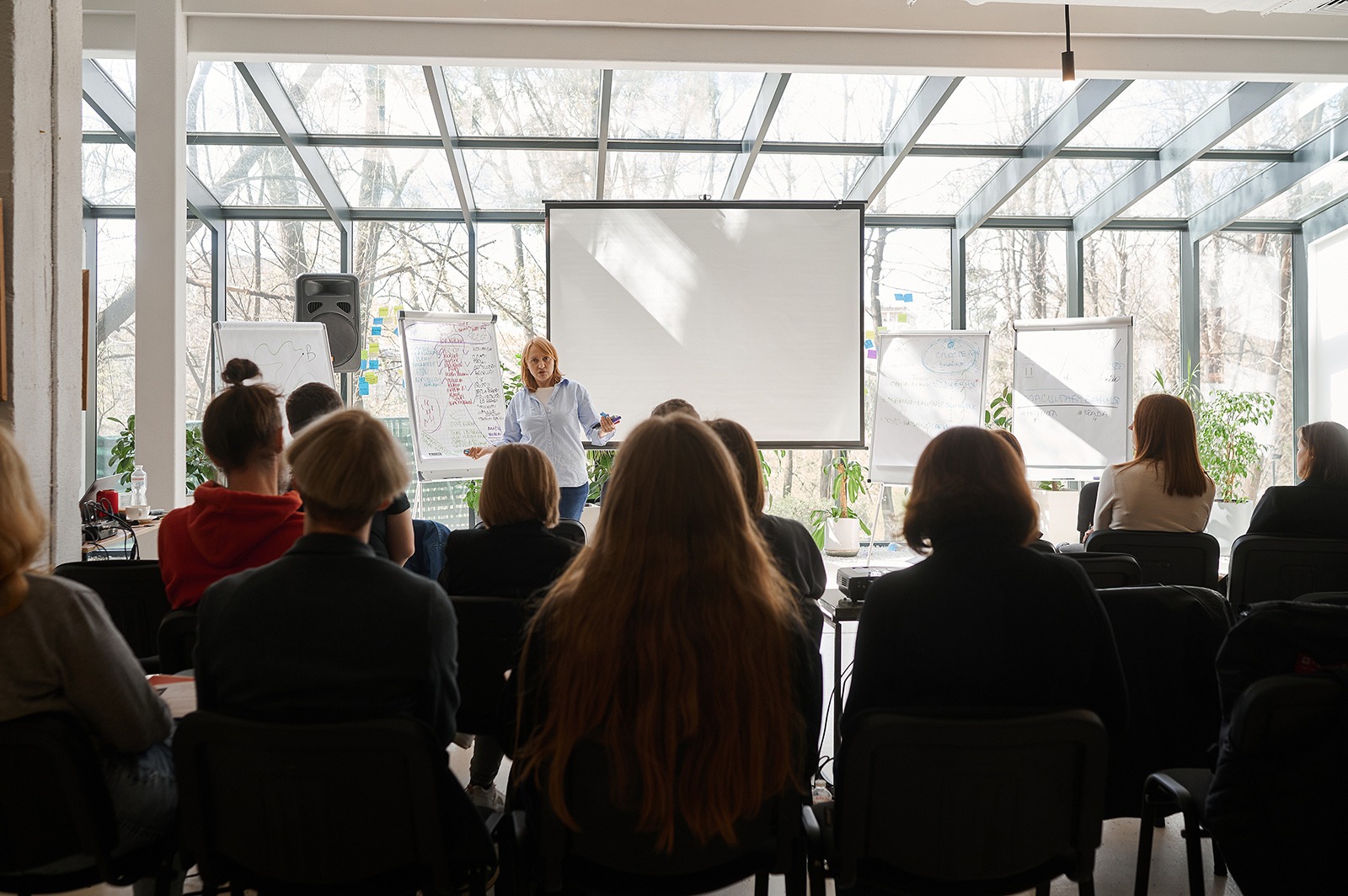
How Kyiv Media School Operates
Kyiv Media School sets out to strengthen the skills of those who stay in journalism, helping Ukrainian media meet international standards and keep up with current pressures. Its priorities include countering Russian propaganda and disinformation, keeping local and frontline outlets sustainable, and finding workable financial models as international funding shrinks.
The school’s programs include:
- Digital Journalism – working with platforms and audiences;
- Media Growth – business-model development for media managers;
- Media Resilience in the Age of AI – artificial intelligence and strategies to counter disinformation;
- Practical Literary Reporting – an intensive on narrative reporting techniques;
-
The Truth About YouTube: From Idea to Monetization – how to build a YouTube channel without the myths and illusions.
Other programs cover news journalism, investigative reporting, solutions journalism, and trauma-informed journalism. What every course has in common is its hands-on focus. Participants work on their own projects, get mentorship, can take up internships, and apply what they learn inside their newsrooms straight away.
The programs vary in length, from three-month intensives to nine-month tracks. Most are free of charge and run online, offline, or in a hybrid format, depending on the course. Admission is competitive and runs through applications on the school’s website. Every participant completes a final project, developing and presenting either a media product or a solution for their newsroom.
The Advantages of Kyiv Media School
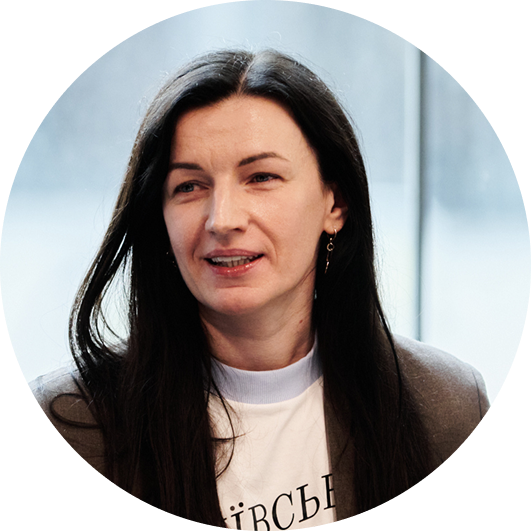
Yevheniia Oliinyk
Program Director, MDF
According to our annual survey, 38% of newsrooms found 2025 more difficult than 2024. Another 25% said the year was «just as challenging,» while 25% described it as «far more difficult and stressful.» Sixty-one media outlets participated in the survey this year.
The workforce crisis has become especially prominent. While low salaries and burnout used to be the key reasons for resignations, this year mobilization topped the list for the first time, cited by 25% of newsrooms – 15 out of 61.
That has created another structural problem: a widening gap between the number of new media professionals entering the field and the number leaving because of relocation, mobilization, or burnout.
In-depth interviews with people in academia made one thing clear: traditional journalism education often struggles to keep up with how fast the industry is changing, particularly in wartime. So we designed Kyiv Media School to be more agile, able to respond quickly both to shifts in the media landscape and to what newsrooms actually need.
We can update our curriculum far faster than a large academic institution. When a new demand appears – AI tools, short-form video, journalist safety – we can build it in almost immediately.
We also bring in practitioners and business experts, so participants pick up strategic-planning skills for their organizations, particularly on the Media Growth course supported by ERSTE Foundation. That helps close the gap between education and practice, and graduates leave with relevant expertise rather than just a certificate.
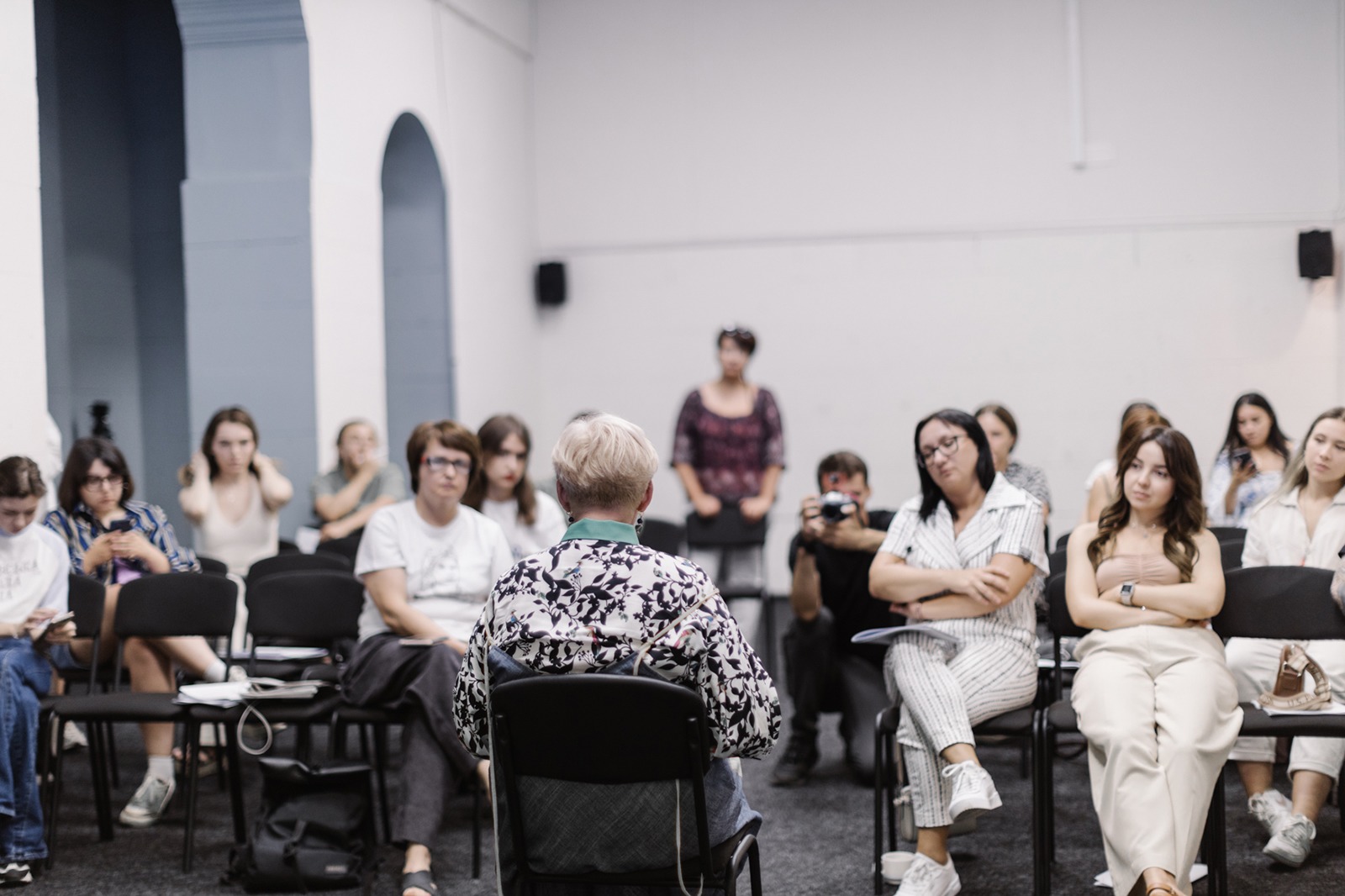

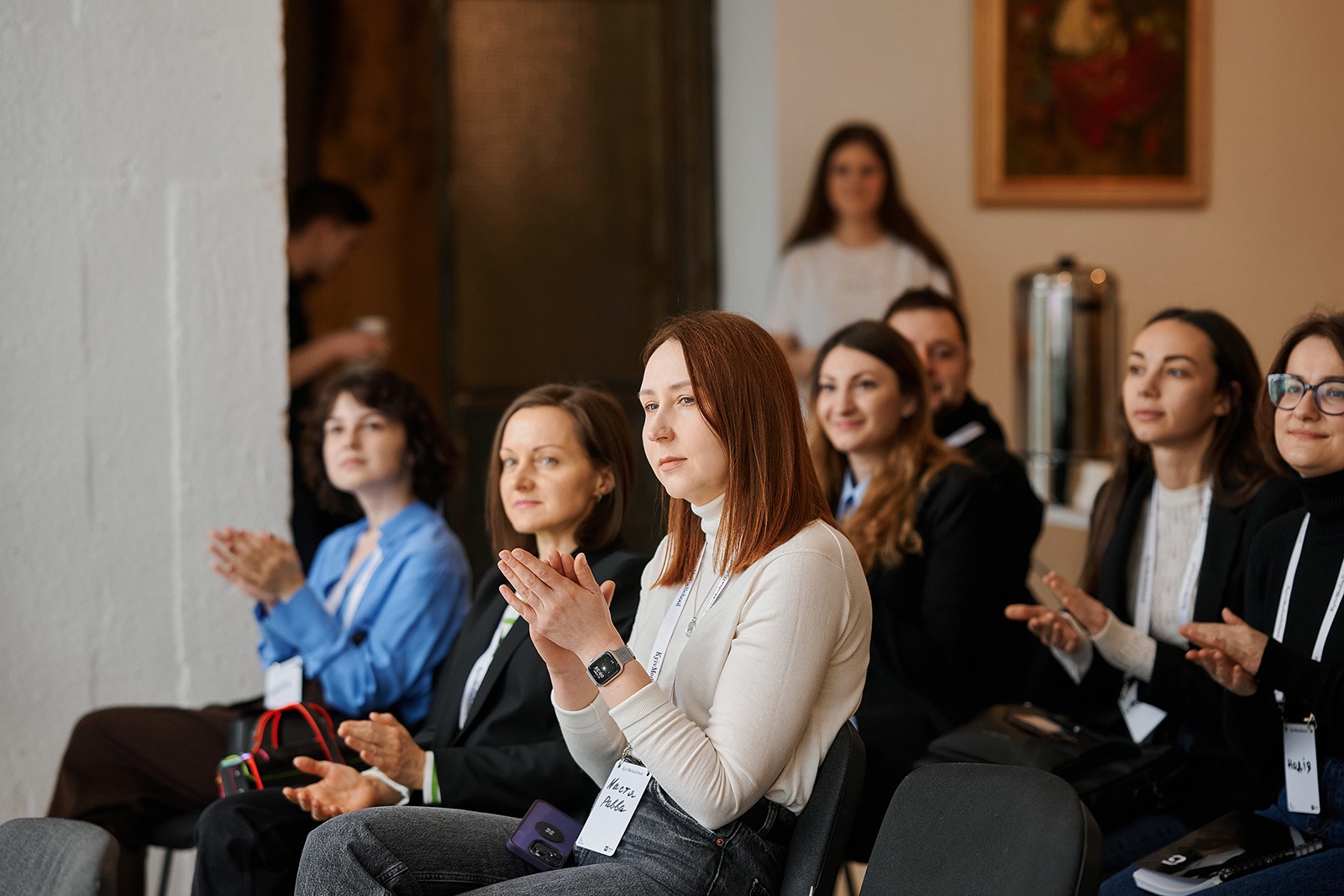
Photo: Serhii Piriyev. Opening of the Media Growth course.

Yuliia Salizhenko
Curator of the Media Growth Course
The challenge the war has really sharpened is burnout. Media professionals were already a high-risk group before 2022; today they work under constant stress with little room to recover. That is why we deliberately built the schedule so it does not eat into participants’ personal time. Classes run for just one hour and twenty minutes, during the working day, from 4:00 to 5:20 p.m. We do not want education to become one more burden. It should be a resource, not another source of exhaustion.
This year marks the third edition of Media Growth, and every cohort impresses us. We take in small local newsrooms and major national outlets alike – true veterans of the industry. What they all share is a dedication to journalism and a drive to do it as well as it can be done. You feel that from the very first session.
What fascinates me most is that every participant is already an expert with a superpower of their own. Some have mastered AI in editorial workflows; others have built a strong HR system or are experimenting with video monetization. They do not just learn on the course – they learn from one another. That turns the program into something bigger than education: a platform for peer-to-peer exchange among accomplished professionals.
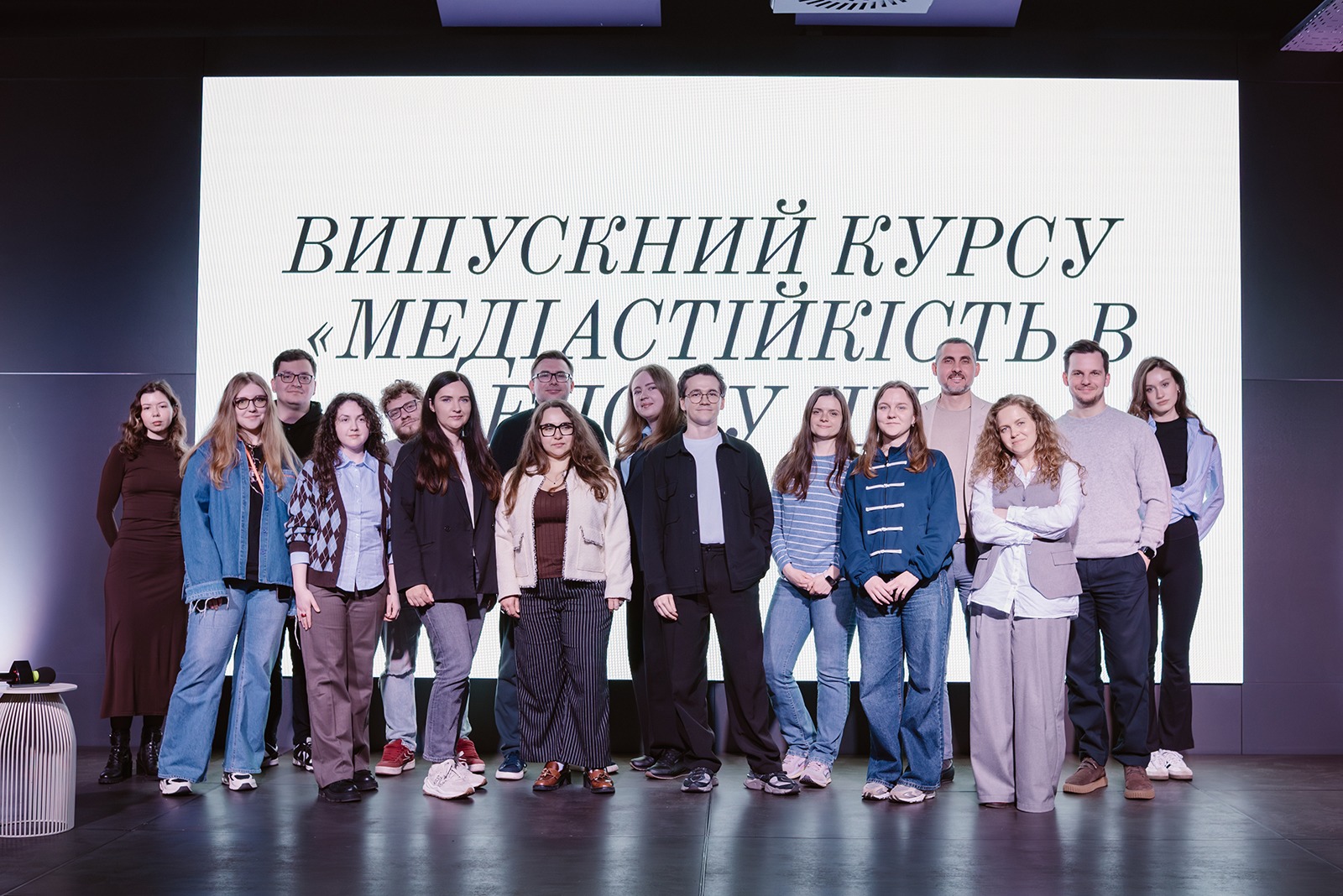
And the most inspiring moment, of course, comes at the end. When participants present their final projects, these are not abstract business plans for some future date. They are real results – hypotheses they tested, what worked and what did not – and that is valuable experience for the whole industry.
How Graduates Apply Their Knowledge
Iryna Herasymova
Editor-in-Chief, Channel 5; graduate of the «Media Resilience in the Age of AI» course
Kyiv Media School’s course turned out to be the most thorough, in-depth AI training I have come across. It ended with a practical final project: a roadmap for bringing artificial intelligence into our channel. Once the course was over, we held a long editorial meeting to decide where AI would be fully integrated, where it would be off-limits, and where its use would be left to the journalist’s judgment.
In practice, we already use AI tools to edit short-form video, structure news digests, process large volumes of information, and handle translation for dubbing. The final editorial call, though, always stays with a person.
Exchanging experience with colleagues from Channel 24 and TSN right there during the course, I learned which tools had failed in other newsrooms and why – which saved us a lot of time and spared us mistakes during our own rollout.

Tetiana Ovdienko
Editor-in-Chief, Ukrainian Service of Radio Svoboda; graduate of the Media Growth course
What drew me to Media Growth was its interdisciplinary approach. The curriculum brought together strategic thinking, product management, behavioral science, finance, and communications. Just as valuable was the chance to work alongside people facing the same challenges and the same level of responsibility.
The program let me see editorial processes from a more systemic angle and compare my own approach with those of colleagues at other outlets.
For me, the conversations that mattered most were not about efficiency or speed. They were about internal communication, sustainable workflows, and working well as a team in an environment defined by constant pressure and fast-changing circumstances.

Kostiantyn Tkachenko
Editor-in-Chief of the agricultural website Latifundist.com; graduate of the Media Growth course
At a certain point I realized I needed to grow not just as an editor but as a media manager. In a newsroom there is a natural tendency to see everything through content – the texts we produce, the topics we cover, how fast we react to breaking news. But media today is about much more than content.
I wanted to learn to see media as a product: to understand our audience, analyze how we are perceived, work out which internal processes serve us and which need fixing, build a strong media brand, and balance editorial quality against business goals. In other words, Kyiv Media School was a chance to step back from day-to-day operations and see the bigger picture.
Thanks to what I learned, our audience has grown by roughly 20%. (It varies from month to month, naturally, but that has been the trend lately.) For a small team that has not added editorial staff in that time, we count that as a real achievement.
This material was produced with the support of